Wednesday, September 8, 2010

To Be Clean Again


The view out the airplane window
like a mirror of my mind
brownish grey
everywhere a diffuse heavy haze
smudged thick in patches
more stew than iced tea
And the ridges
snaked convolutions
snowtopped peaks
shine bright white,
valleys layered with old snow lying
like nicotine stained fingers
shriveled on the edges

We need a good long scrubbing
Followed by a thorough dowsing
An invigorating downpour of water
Rainforest fresh or
Newly released from glacial depths
A cleansing to wash away the
Accumulated ooze and grime . . .
To emerge clean, pure, renewed
Dare I say--reborn?

But the purest rainforest
fall and glacial melts are
tainted too
There will be no simplistic
one-time cleansing
no easy fix-it-all deluge
no purification by proxy . . .
The scrubbing will be long and hard

I look out the window as we slowly
descend

I wrote this poem at the end of the century. It came back to me today as I was thinking about my weekend in the deep woods, trouble at work, financial insecurity, and running behind on too many promised projects. I stood in the shower under a deluge of hot water and thought about how fiercely positive I was two weeks ago when I wrote my Cost of Living blog. I wanted to follow that blog up with tools of hope—and here I am, feeling brownish grey and shriveled on the edges. How can I preach hope when I feel so hopeless?

Perhaps I need to spend some time talking about hopelessness before I can get back to hope. After all, one of the problems with this society is our tendency to think that if we can just get to that one, magical spot, then everything will work out and we will live happily ever after; if we just get to a place of hope, it will stay bright and shiny in our hearts forevermore. The truth is that everything ebbs and flows, including hope. The trick is not to keep hope glowing non-stop—the trick is making it through the dark until the next tide comes in.

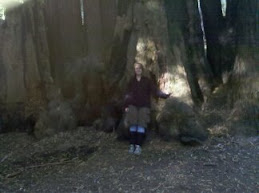
I was in the woods this weekend. Specifically I was in the Mendocino Woodlands State Park at a camp in the middle of 700 acres of redwoods, next to a thin rocky creek, at the bottom of a long, dusty mountain road (http://mendocinowoodlands.org/home.html). There have been Unitarian Universalists camp gatherings held there for at least 30 years. This was my first time and there are many stories I could share, but that is for another time. What I brought back with me that I want to share here is the dark depths of the forest. Even at high noon, the sun merely filtered faintly down to dimly light the soft needle paths, the floor of ferns and rocky outcroppings stretching steeply up on either side, hemming me in with rock and thick soil, and trees as tall as city buildings. The silence was profound and left my ears ringing with the void until they adjusted. Then I could hear…..something. The soft hum of life, barely on the edges of my awareness. I sat in a small patch of sunlight on a moss covered log and listened to the almost-silence, and let the forest seep into my soul.

We were surrounded by young redwoods—young, by redwood standards since the area had been clearcut in the 1930’s. The remains of ancient, old redwoods were everywhere—burned out trunks as large SUVs still standing as living reminders of some long ago fire. Redwoods can keep growing even when their cores get burned out. These stumps were not stumps because fire killed them—they were stumps because humans cut them down. Even so, some survived. Redwoods send out roots that grow up into new trees. The new trees are exactly the same as the old trees genetically, so you can say that these trees are thousands of years old, although only the youngest growths are still viable. There is a critical difference, however. The new trees are growing in a different environment, one that encourages fast growth. Because of this, the new redwoods are soft. Old redwoods can be almost as hard as steel—difficult to cut and very sturdy. While we still have redwood forests, we will never again see trees of steel. That environment is gone, forevermore.

We have done so much damage to this planet. We have lost so many species, polluted so much of our water and air, lost so many forests. And we have built such amazing things—telescopes that can see far out into space, spaceships that have shown us the moon, seacraft that have allowed us glimpses of the ocean depths. We have looked inside the human genome and found amazing complexity, and miraculous cures. The yin and the yang—creation and destruction. There must be balance. It is a rule of nature, a rule of physics, a truth that all religions have recognized even if they have not always practiced it.

This brings me back to my poem—to be clean again. Isn’t this what we all yearn for—a return to balance? Aren’t we all just exhausted by the constant, niggling fears? By the never-ending, low-level insecurity that runs through all of our lives? Don’t we all feel grungy and dusty from slogging through all of the day-to-day grime of life? Doesn’t a deluge of pure, clean water sound fantastic and refreshing? Oh, to be clean again!

And so I came home from the woods, filled up with their deep silence, and I realize how incredibly thirsty I am for change—and just how far away that change is. The reality is that change takes lots of hard work. Lasting change means doing lots of mundane, every day cleaning—rolling up our sleeves and scrubbing out those sinks, cleaning up the toilets, and washing down the walls. Change means that sometimes we will inherit difficult things to deal with: losing a job, going bankrupt, racking up medical debt, feeling overwhelmed, dropping into depression, losing faith. Sometimes hope is just too hard to reach for. Sometimes it is all we can do just to keep breathing. And that is OK. Sit with the deafening silence, sit still and breathe. Wait until our ears adjust and we can once again hear the faint flow of life that is busy living all around us.

InPeace, Nikki

Wednesday, August 25, 2010

Cost of Living

For most of the past year, I have worked as the Administrative Director for the Butte Environmental Council. I inherited an administrative mess, a financial tangle, and an almost non-existent development program. Working on part-time hours, with the assistance of amazing co-workers, consultants and interns; a supportive board; a patient and generous membership; and committed regular volunteers—we have succeeded in stabilizing the organization. We have survived, although just barely. We have not—yet—been able to thrive. Even with all of the hard work I have done on the BEC budget and finances, we are still struggling financially.

In looking at my own, personal finances, the struggle is repeated. As a part-time employee, I make $1720 a month, gross, from my BEC work. This works out to about $1290 net per month. Of this, 20% of my gross income goes to pay for my student loans. However, looking at gross income is not a very accurate picture of reality, since I can’t pay bills with gross pay—it’s the net pay that counts. So, actually, my student loan payment is closer to 28% of my monthly income. That leaves me $960 a month to pay for rent, utilities, gas, and food each month. This doesn’t count things like car insurance, car repairs, credit card debt (which, yes, I have), or my out-of-pocket medical expenses since my part-time job does not come with health insurance. Even with all of the hard work I have done, I am still struggling financially.

This is not a unique story. I hear this every where I go: church, friends, other organizations, family members all talk about how tight money is, or how hard it is to find work, or having to take on extra work just to make ends meet. Nonprofits are cutting back, letting employees go to save the larger whole, or they are failing and throwing everyone into the unemployment lines. Heck, even my bank failed last week!

And yet, I do not want to focus on the negatives. All of the struggle sets the stage we are on, but it does not write the play. We still get to choose what we do with the money that we do have. We still get to choose what we do with our lives both in work and at home. We can freeze up in fear, close up and shut down; or we can open up to the amazing opportunities that can be found within and together in community. We can reach deep inside and find reservoirs of generosity and passion that we never knew existed. We can reach out to find others who can make us stronger, smarter, more energized. We can live our lives out of a place of hope and love.

This is why, even with my own little financial drama, I still find ways to give money to BEC every month as a BEC Angel. It is why I continue to attend fundraisers for local nonprofits doing great work. It is why I take the time to have breakfast with a friend, or go for a walk with my mom, or drive four hours to see my sister in Oregon. Keeping the flow going is what feeds the hope, and hope is what keeps us moving forward, growing, changing, making things better.

I am not saying don’t ever despair, don’t ever worry or fear. I often wake up at four in the morning worrying about BEC’s finances and my anxiety can keep me from falling back to sleep. There is a place for worry and fear and even despair. Those black depths are a part of the human experience and denying them only drives them underground.

What I am saying is that we need to work harder at actively cultivating hope and love and passion. Fears are a dime a dozen. They are cheap and easy, and fear is too often our default in this society. We need hope, and we need to do the work that grows hope. We need to work at growing creativity and thoughtfulness. We need to support people and organizations and experiences that will move us out of the either/or status quo of materialism and into something brighter, healthier, cleaner. We do that with our time, with our talent, and with our money. We do it within our selves, and we do it together, in community.

Financially speaking, I would do much better getting out of the nonprofit sector. A better paying job would make my expensive graduate education worth the cost, as well as better enable me to pay for it. However, the cost of living is much more than the bills we pay or the debts we owe. The cost of living is in the courage and perseverance it takes to work for something better, because working for something better is not easy. It is hard work. It is also good, rewarding, hopeful work.

InPeace & Hope, Nikki Schlaishunt

Tuesday, January 19, 2010

Dreaming Deeper

My dreams seem so much smaller now. When I was a child I used to dream about making best friends with a wild horse. Together we would explore the world and have great adventures. When I was a little older I dreamed about having super powers. Together with my team of fellow super heroes, we would do great deeds, stopping bad guys and saving damsels in distress. Then I learned a little something about politics and how the world really runs, and I dreamed of growing up to be President or a Senator. I imagined I would have a strong partner by my side and together we would strike down injustice, right wrongs, and save the world—the dynamic duo!

In high school I got a little lost. For a while I had that partner, that special someone who saw injustice as I did and was as committed as I was to doing what it takes to right wrongs. But I wasn’t able to see a future for us because there were no models for what we had. What super hero was gay? What Senator? This was before Ellen, before Will and Grace. I had no idea how to fit ‘gay’ into my dynamic duo dream, so I bounced around aimlessly for a while, feeling all alone in the world.

When I met Scott, I thought that I had found a perfect match—he was practical where I was starry-eyed. This wasn’t a pie-in-the-sky, tilting at windmills batch of dreams. This was regular, ordinary, doable dreams: marriage, children, a house, a dog. It wouldn’t matter what I did for a career—anything would do because the root would be the family we would create. It was a good idea, and—while it lasted—it was a good dream. What we found out was I needed extra-ordinary dreams, and Scott did not.

Enter Brad. A social justice warrior, living on the fringes of society, working in the trenches, righting wrongs by day and playing music and talking politics with friends by night. I think we were both surprised by the intensity of our first meeting, a sense of recognition, of fitting together perfectly. Except for my having a husband, of course. So we went along for a long time, trying to be just friends, ignoring the elephant in the room that our meshing was so much more…

Together, we have been through many challenges. Mostly those challenges have been how to pay the bills and put food on the table—subsistence challenges. Not the sort of world-changing work I had hoped for, but life is often like that. Even so, we have persevered. We had dreams of moving to California, of getting jobs that would make a difference in the world, of having a home of our own, and friends, and community. Years later, we are here. We live in California and we both have non-profit jobs that pay enough that our dream of having a home of our own is actually within reach.

So, why don’t’ I feel better? I think I have learned to settle for less. I have learned to reach only for the easy dreams, the exciting start of the journey, the outside packaging, instead of going deeper. Instead of spending evenings mixing creativity and politics and community building, I watch murder mysteries on TV and make pithy postings on Facebook. Instead of saving the world with my partner by my side, we work on our laptops, alone in the same room. Instead of reaching for those starry dreams of a shared housing community, I have dreams of a single home with a single family. Anything else is too exhausting. This is middle age, huh? Too tired to dream anymore.

And that pisses me off. Just because I am in my forties, I can no longer dream of magic and saving the world? Just because my heart has been broken time and time again, I am going to give up and settle for less? Just because I fear losing my home, my partner, my income, I am willing to trade in dreams of a better world for a make-do world? I don’t know that I like this person that I have become. This person with the small, practical dreams. Like The Waitresses say, “I want magic in my real world!”

Maybe I do not have the fiery energy of youth any more, but that cannot stop me from reaching for the stars, for dreaming the impossible and working to make it real.

I’ll just have to pace myself and take more naps!

Friday, January 8, 2010

News From Nikkiland 2009

Famine & Feast
It has been a year of Famine and Feast. We started out the year not able to make ends meet. Brad was still unemployed and I had two jobs that just didn't pay enough to cover our bills. Without the support of family, friends and strangers (w received two annonymous $300 checks in March) we would have ended up homelss. While mom and Dan would have given us shelter, we stil lwould have lost our apartment and faced bankruptcy.

In May, Brad was hired as the Executive Director of the Torres Community Shelter (irony? serendipity?). Compared to jobs in the private sector his salary is tiny. Compared to the financial dire straights of our spring, his salary is great riches! My work situation has, likewise, improved. In Arpil I started working as a grant wirting assistant for Tempra (that's her name) which was better hours and money. Then in July I started working again for the Butte Environmental Council (BEC) in a leadership role this time. On the sad side, this meant leaving my daycare work; on the happy side, this meant almost double the money. Again, small by comparison to the private sector, and huge compared with our great lack just months before.

Career
Early Childhood Education (ECE): This past spring was heavy on ECE advocacy and learning for me. Jen and I went to two different ECE conferences, and took several different classes, most of them having to do with growing brains. [For more on this subject, see my February 13 and March 20, 2009 postings.] Sadly, I left this field in July. I greatly miss the children, the mini-farm, and working with Jen.

Grant Writing Assistant: In April I started working for Tempra as her grant writing assistant. I have learned a ton about writing grants and other development work from her, and yet there is still much more to learn. I enjoy the work, even though some of it is tedious, and I greatly enjoy working with Tempra.

Butte Environmental Council (BEC): I was asked by the Board to return to BEC to help with the transition and to provide the leadership they knew they needed. We have done a ton of work, and still more remains! The Board fired the Executive Director the end of June, and that case is stil not settled. Since then I have waded through records and finaces and contracts, and I can tell you that we have inherited a very challenging set of difficulties that will take at least another six months to work through. BEC has been able to keep active with our advocacy and education work, but unless we can up the income, we will eventually have to cut hours or loss staff, which will mean we will have to decrease our efforts and, thus, our effectiveness. So, my work is cut out for me! Overall, it is challenging and rewarding work and has been a great learning experience.

Volunteer Work
UUFC: I started my second year on the Board at my church in July. We said good-bye to our interim minister in June and welcomed Sydney and Dennis, a retiring minister couple, as our new part-time ministers in August. They have been wonderful to work with! There have been some unique challenges on the board this year--working to solve our space issues, and getting our personnel policies into order.

Rogue Theatre: In July I handed over the treasurer position to Delisa and took over her secretary role. In June we had another Drag-e-okee event, and Brad sang dressed in drag (photos available for viewing on Facebook!). We also decided to add a formal season opening gala, which we are calling the Rogue Bacchinalia. In October we (well, mostly Betty) did a 24-hour Dance-A-Thon, which raised a good chunk of money and was lots of fun even though attendance was low. This year I also participated in the Fringe Festival, and wrote a ten minute play that was very well received.

Friends & Family
As most of you know, my Grandpa Leeth died in May. [See may 8 and May 15, 2009 postings for more details.]

In June, Brad's mom Joanne, daughter Sarah, two granddaughters Marisa and Breanna, son Austin, and his girlfriend Iris, all came to visit Chico for a week. We got a hotel room for Joanne, Srah and the girls, while Austin and Iris stayed in our living room. We had a great time showing them around Chico and the parks and just visiting.

In July I went to my second California World Music Fest. I drove up with Dan, stayed in my own tent in Jen's camp, and then drove back with Jen, Kiran and Elias. The music was awesome, as always; the weather was killing hot. I spent the entire afternoon at the inside venues, trying to cool down on the cement floors. Hopefuly next year will be less hot! Also in July, friends and family joined us at the Chico Outlaws baseball game where the Torres Shelter was the featured nonprofit. Brad threw out the opening pitch, and we all got the best seats--behind homeplate on a couple of couches out of the sun.

In August, my mom and I drove up and picked up Summer for a weekend away. We went to Klamath Falls, stopping at the Lake in the Woods on the way. It was a low key vacation, but very nice to just hang out together. Later that month our friends Tim and Joel came up to Chico for a side visit from the San Francisco vacation. After, they decided to move to SF. Joel is now in San Mateo waiting for Tim to fix up and sell his house so he can move too. I am very excited they will be so close!!!!!

In September, I wanted Brad to see Mendocino, so I booked us a campsite at McKerricher State Park. It is in a patch of woods next to the beach and is a lovely little place. It was, however, very cold and foggy the weekend we were there. We had a nice time visiting shops and galleries in Mendocino, hiking down the cliff to the beach, visiting glass beach in Fort Bragg, and walking the boardwalk at McKerricher.

In October, I returned to Mendocino with my family. My mom, sister Summer, and my Aunt Karen and her three grown daughters, Melanie, Debbie, and Michelle, all rented a house in Casper. It was beautiful with wonderful ocean cliff views, a hot tub in the back, and a wood stove. Summer was sick the whole time, which was disappointing. She was able to join us for some shopping and we also played games and talked and snacked by the wood stove. We all grew up together, so it was great to be able to spend some extended time together as adults. We all agreed to do it again next year!

Halloween: Our increased income made it possible for me to fly back to Milwaukee for my church ladies' annual Halloween gathering, and to catch up with my friend Kristin and her family. It was freezing that weekend, but being able to leisurely catch up with Kristin and spend time with Greg and their children Maya, Evan, and Adia made it worth it. At our Halloween gathering, we all wore our best witch outfits and we got to hand out candy to the trick-or-treating children. I also got to be there when the group gave Lori the stole we had commissioned for her. She graduated from seminary and we had wanted to do something special for her. It is an amzaing stole, and she was very touched. I also got to hear her preach, since she happened to be doing the sermon at Kristin's church the weekend I was there!

In November, Brad's dad, Jim, took a train out to visit us. He stayed with us for a week. Both of us had to work most of the time, but I was able to take him out to Bear Hole one day when I was free and Brad was not. Brad and I had Thanksgiving at Mom & Dan's. Most of Dan's family came up too. After dinner we both went by the Shelter to help out with the festivities there. There were plenty of people helping, so we didn't stay as long as we had thought we would need to.

In early December, Brad and I flew back to Milwaukee to celebrate Christmas with his family. We stayed with his mom and Aunt Di, and the day after we arrived Austin and Iris, Sarah and the girls, and Jim all came over to open gifts and drink the chocolate martinis that Joanne learned to make! We had a very nice day of celebration. We spent the week working remotely, visiting friends. and surviving the cold.

Famine & Feast Reprise
From When Things Fall Apart by Pema Chodron: "Fear is a universal experience. Even the smallest insect feels it. We wade in the tidal pools and put our finger near the soft, open bodies of sea anemones and they close u. Everything spontaneously does that. It's not a terrible thing that we feel fear when faced withthe unknown. It is part of being alive, something we all share. We react against the possiblity of loneliness, or death, or not having anything to hold on to. Fear is a natural reaction to moving closer to the truth."

It is a time of great change. Where once we walked secure on firm earth, we now find ourselves slipping on shifting sands--gritty, silty-slick. We are struggling to find a new balance, a way to negotiate this new terrain. We find ourselves facing the unknown, looking for a way back. There is no way back, there is only moving forward.

Fear is a natural reaction. But we don't have to make choices out of fear--closing up, separating. We can choose to make our choices out of hope, out of love, out of faith in ourselves and each other. We can choose to open up, to grow closer. This is the great gift of these uncertain times.

May you all be blessed with a great blossoming.

Wednesday, July 22, 2009

Of Babies and Bathwater

At the BEC membership meeting last night, several people used the phrase “Don’t’ throw the baby out with the bathwater.” This morning I was reviewing all of the many stories and opinions shared and I realize that babies and bathwater is a very appropriate metaphor in this case. Afterall, isn’t it the recognition of water as a precious and limited resource that has us all so concerned about BEC and advocacy?

There seems to be an endless, renewable supply of water here in Northern California. Even in dry years it still rains and snows and the creeks and rivers don’t run dry. Well, mostly they don’t run dry. As a community we are slowly coming to realize that water is not limitless, and yet the majority still use sprinklers to water large lawns (and the sidewalks, more often than not), take long showers, wash our cars in our driveways, all without much thought to how we might better conserve this resource. Nor do the majority think about just how easily we might lose this easy, mostly free access to a valuable necessity. Without water, life is not possible.

Babies are pretty important too. They are the means by which we perpetuate the species and they are pretty darned cute. Although perhaps a little less cute after being up all night screaming. Still, we don’t throw them out when they scream because babies need us to care for them or they would not be able to survive. We can’t expect babies to feed themselves or pay the bills. It is not reasonable to expect babies to show respect and empathy for their parents’ need for sleep by limiting their crying to daylight hours only. However, we do expect babies to grow and learn.

Last night I heard seventeen years worth of talented, committed, passionate former board members, staff, and volunteers speak. The story was pretty much the same throughout those seventeen years: Each started out excited by the goal of protecting our environment and making BEC the best organization possible to achieve that end. Each person worked very hard at helping Barbara, and each found Barbara turning her formidable, aggressive advocacy skills on them. BEC has had seventeen years of repeatedly draining the organization of great workers and refilling with new great workers in what seems to be an endless cycle.

Water is a valuable and limited commodity. The consequences of our actions, of our thoughtless use of water as an endless, renewable resource, have led to the draining of all of California’s aquifers except for the one we all live above—the Tuscan Aquifer. Clean, plentiful water is an inextricable part of a healthy ecosystem, of which our human community and economy are an interconnected part. When one part is sick or abused, that sickness or abuse ripples out to affect the whole.

Human creations like organizations function in very much the same way. We are all part of the ecosystem—the office workers, board members, and star advocates alike. The system only functions well when the whole works together, each doing their part to create a larger, healthier whole. Both water and babies are important and neither should be discarded lightly. I think the current BEC board is no different than the many past BEC boards in valuing both, and I do not think they made this decision quickly or lightly.

The thing with bathwater and babies is that sometimes you need to change the bathwater, and sometimes the baby needs to grow up.

Sunday, May 17, 2009

Grandfather

My earliest memories of my mom’s dad are from when I was about four years old. Grandpa got up very early, cooked himself breakfast and then went off to work long before the rest of the house was up and about. Except for me. I loved getting up with him. He made the most delicious waffles, with real melted butter and maple syrup that he had sent to him from back in Michigan where he was from. I would sit at the big long dining room table with my plate full and watch him cook bacon on a grill thing that sat on the dining room table while he tended the waffle iron, which was also on the kitchen table.

I loved the smell of the bacon and the fresh perked coffee, although I didn’t have (or want) either of those. I knew that it was something of an interruption, having me there to tend to and serve, so I tried not to ask too many questions or talk too much. This was very difficult for me because even back then I was very loquacious (and filled with ‘satiable curiosity!). I am certain that sometimes I tried his patience. Still, there was something so special about those mornings that whenever I spent the night at my grandparents, I would go to sleep reminding myself to wake up early enough to have breakfast with grandpa, and I was so disappointed with myself when I woke up late and he was already gone….

In the High and Far-Off Times, my grandfather, O Best Beloved, was born Giles Garth Leeth in Clare Michigan, May 11, 1922. During one of our conversations last summer, he told me about his childhood summers on the farm, and how sad his grandmother was later after selling the farm and moving to town. He told me that one of his jobs on the farm was to go out and find the newborn calves because they would curl up in the pasture and make themselves very small and hard to find, but they had to be brought in where they could be kept safe. He told me that as soon as he learned to read he read everything he could get his hands on, including women’s magazines. In high school he won a city-wide spelling contest and the prize was a trip to the 1938 World Fair in New York City.

Grandfather was a navigator in the Army Air Corps in WWII. He graduated with a BS in engineering in 1949, and later went through a course of study in atomic energy before there was such a thing as a degree in nuclear engineering. He worked for G.E. and for Tempo (a research arm of G.E.) for 34 years, developing project plans for a variety of different areas, including propulsion and nuclear technology. Even in his last year of life he was tinkering around with different engineering inventions. He loved problem solving real-life issues and coming up with concrete engineering solutions.

He also loved to joke around. He told me lots of stories last summer about all the jokes he and his engineering buddies would play on each other at work. One I remember involved the creation of a very long sling shot which the engineers used to launch paper clips into the cubicle of the physicists at the other end of the room. (They quickly pieced together a white flag which they hoisted up over the cubicle wall.)

Grandpa loved golfing and backpacking. Some of my earliest memories are of grandpa getting ready to go on a hiking trip. He loved going up into the mountains, getting away from people and life as we know it. When I was nineteen, he agreed to take me on a hiking trip. I had never even gone camping before. He packed for me, helped me pick appropriate clothes to wear and bring, and we drove to the east side of the southern Sierras. We planned a three day, two night trip. The first day we hiked about eight miles and 800 feet in elevation and I was exhausted, but he just kept on going. It was breath-takingly gorgeous. Colors were startling fresh and vivid—the spring greens stretching every where, splashed with bright yellow flowers, and a liquid blue sky above. And the water! We camped next to a small creek that was melting directly off of the glacier, and I had never tasted anything so delicious.

The next morning I came out of the tent when I thought I heard an airplane overhead. “No,” Grandpa said, “That’s an earthquake.” It was a loud, gravelly roar like a jet engine with rocks in it. “I had no idea that earthquakes made noise!” I told him. Way up there in the mountains, with no people or buildings or cars and such, the earth shifting is a full-sensory experience—sound, sight, feel. He said it looked like rain, so we should head back instead of trying to stay another night. I had been looking forward to a light day hike and some rest before tackling the return hike, but that was not to be. He kicked my butt, walking all the way back to the car, stowing his backpack and coming back for me and taking my backpack before I could finish the last mile. I got to the car just as the rain started in earnest.

I never asked to go again. He didn’t think women could really do real hiking, and I had proven him right. I wasn’t about to ask for another round of humiliation. It’s too bad, though, because I probably could have gotten acclimated, and it truly was magically beautiful. But, at nineteen, I had no idea that some things you just have to work hard at before you can do them.

When I was a child, grandfather used to read to me. He read short stories, books, poetry. My favorite poem was “The Cremation of Sam McGee” by Robert W. Service. My favorite book was the Just So Stories by Rudyard Kipling and my favorite story in that book was “The Elephant’s Child.” The language was lovely and juicy and full of texture and life. For example (and you really should read this out loud for the proper affect): “That very next morning, when there was nothing left of the Equinoxes, because the Precession had preceded according to precedent, this ‘satiable Elephant’s Child took a hundred pounds of bananas (the little short red kind), and a hundred pounds of the sugar-cane (the long purple kind), and seventeen melons (the greeny-crackly kind), and said to all his dear families, ‘Good-bye. I am going to the great grey-green, greasy Limpopo River, all set about with fever-trees, to find out what the Crocodile has for dinner.” I think this is why I am a writer. [If you want to know what the Crocodile has for dinner, O Best Beloved, you will have to read the story yourself!]

My grandfather loved words (another reason why I am a writer). Back when I was just a child and eating breakfast with grandfather, sometimes he would teach me new words. I am sure, out of desperation when I just could not keep quiet for two minutes in a row (do you know how long two minutes is to a four-year-old?), he would try to keep my mind so busy that I would have to shut up and let him read his paper and drink his coffee in some peace. (Come to think of it, that is also probably at least partly why he taught me how important it is to chew your food thoroughly, at least sixty times per bite he said…) In particular, I remember having a long conversation about the word ‘irrelevant’. We discussed it until we were both satisfied that I clearly understood its meaning and use. And I used it too, on my Kindergarten teacher. She was trying to get me to do what she wanted by using a distraction technique, to which I promptly replied, “That’s irrelevant!” (Score one for the ‘satiable Elephant’s Child!)

My grandfather was Old School. He believed that boys and men are smarter and stronger than girls and women, mainly because girls and women are “too emotional” to be smart or strong. He believed that the hard sciences were the only real thing in the world and studying anything else, like psychology or political science, was fluffy silliness. And don’t even get him started on the frivolity of religion! Mostly he would just snort and mentally place you in the “idiot” category.

Even so, his strong points were very good strong points. I was double-blessed in the careful cultivation of my curiosity from my grandfather and his daughter, my mother. He valued a sense of curiosity, and encouraged children to ask lots of questions and do lots of thinking about the possible answers. A strong questing, curiosity is my legacy and it is a rich and never-ending treasure trove.

I will miss you, O Best Beloved.

Friday, May 8, 2009

Fire

On Tuesday, May 5th, my grandfather died. He was 86 years old. He died a peaceful death at home with two of his daughters by his side, the end of a long struggle with cancer. As a lifelong atheist, he requested that we have no ceremonies for his death.

Grandpa actually had been in relatively good health until about the last two months. He was too weak to do hiking or golfing any more, but he still had mental clarity and greatly enjoyed reading and conversing. The last two months were harder and he finally asked for help. My Aunt Di, my Aunt Karen, and my mom all met at his house and worked out a schedule. My Aunt Di does not have scheduled work so she took three weeks on and one week off. My mom arranged to cover the one week rotation for as long as needed.

This was a hard time for my mom, not just because her dad was dying, but because of her relationship with her sister. My Aunt Di thinks about family and the world very differently from my mom and that has led to a strained relationship. Having to work together under these circumstances has been very draining for my mom. A small illustration: two sisters in their dying father’s kitchen. Di making the roast chicken she had cooked that week into a pot of soup. They are talking about their dad and what they can do to help him and help each other. Di finishes the soup, looks at my mom and says “What are you having for dinner?”

So, my sister and I planned to visit mom during her next week. We bought plane tickets to fly in and see her on May 7th. On May 1st, Aunt Di called to let us know that the grandpa had decided he was done, and the hospice nurse was putting him on a drip that would reduce his anxiety and, basically, keep him asleep until he died. On May 4th mom drove down to grandpa’s. She was up until 2am with Grandpa and gave him his late night dose of morphine, then finally got some sleep. She woke about 6am when grandpa’s breathing changed. He died about 7:30am.

When my mom called me, I was in the shower, so she left me a message. Since I woke, a song had been running through my head. As I got dressed, I realized what song it was. “What an odd song to be singing!” I thought, and then I got the phone message. The song going through my head was, “go tell aunt Rhodie, go tell aunt Rhodie, go tell aunt Rhodie, the old gray mare is dead.” I haven’t heard that song in years.

Mom asked me and Summer to still fly out. Brad drove me to the airport in Sacramento on Thursday and I got into Santa Barbara mid-morning. We spent the day catching up, visiting with Aunt Di and Uncle Lynn, getting some things done around Grandpa’s house, and making plans for a gathering the next day that Grandpa’s neighbor and dear friend Lee was planning. The house was oppressive, what with Di worrying, and Lynn in fix-it mode, and mom worn out from the waiting and the death and the company.

We decided to go to the beach and then out for ice cream. Back at the house, we had some quiet time, resting in the heat of late afternoon, talking about what needed to be done. We knew there was a fire, but it was on the other side of town, up in the mountains. We could see the smoke, slow columns of clouds up and away to the south. Fires happen in the Santa Barbara mountains fairly regularly, they are a fact of life, and so we put it out of mind.

My dad and his wife called and asked us to out to dinner, and we accepted. When we came out from dinner, everything had changed. The smoke clouds had merged into one huge cloud that took up a whole half of the sky. It loomed over us, and we could actually see flames on the mountain. As we watched, the fire rushed across the mountain, towards our side of town. The wind was crazy. We bought some boxes and when we got back we decided to pack up what we could since the fire had obviously taken a large turn for the worse. We got a lot of items packed up in our car and in Grandpa’s mustang. Di and Lynn showed up with their truck and helped us pack more. Then we got the first reverse 911 call letting us know that we were in a potential evacuation zone.

Summer was due to fly in at 11:45pm and we didn’t know if we would be allowed back into the neighborhood. We tried calling hotels—everything was booked. The news said that 8,000 had been evacuated. We watched television reports, trying to decide what to do. Di and Lynn agreed to stay at grandpa’s until we came back. That way if the evacuation order came they could call us and tell us not to come back. Summer’s plane got in early—we met her at the gate and told her, “Welcome to Santa Barbara! We’re driving home.”

About that time we got the message from Di that the evacuation order had come. She also let us know that my dad had called looking for us and asked us to call. They said they were all ready to put us up for the night. That was much better than starting the drive back home at midnight, and they live only five minutes from the airport. We had breakfast with them in the morning and then just started home. It was pretty squishy in the car, what with all of our gear and some of grandpa’s stuff too.

It had been a hectic 24 hours for us all so we decided to stop at the beach and spend a little time soaking up the sun and re-energizing. Still, it was a very long drive home and we were all very happy to get to Chico.

Years ago, when my grandma died, it was two days after my grandpa evacuated her from another Santa Barbara fire. I think it is only fitting that his death was also met by fire.